
Winery Santiago Ruiz, Rias Baixas
O Rosal, where
emotions are born.
In this subzone of Rías Baixas, mist settles like a veil over the hillsides, and silence intertwines with the sound of birdsong. A living yet serene landscape, where nature sets the rhythm.
Here, the Atlantic Ocean and the Miño River meet to create a unique microclimate: more hours of sunshine, less rainfall, and mild temperatures throughout the year. A privileged environment that defines the character of our wines.
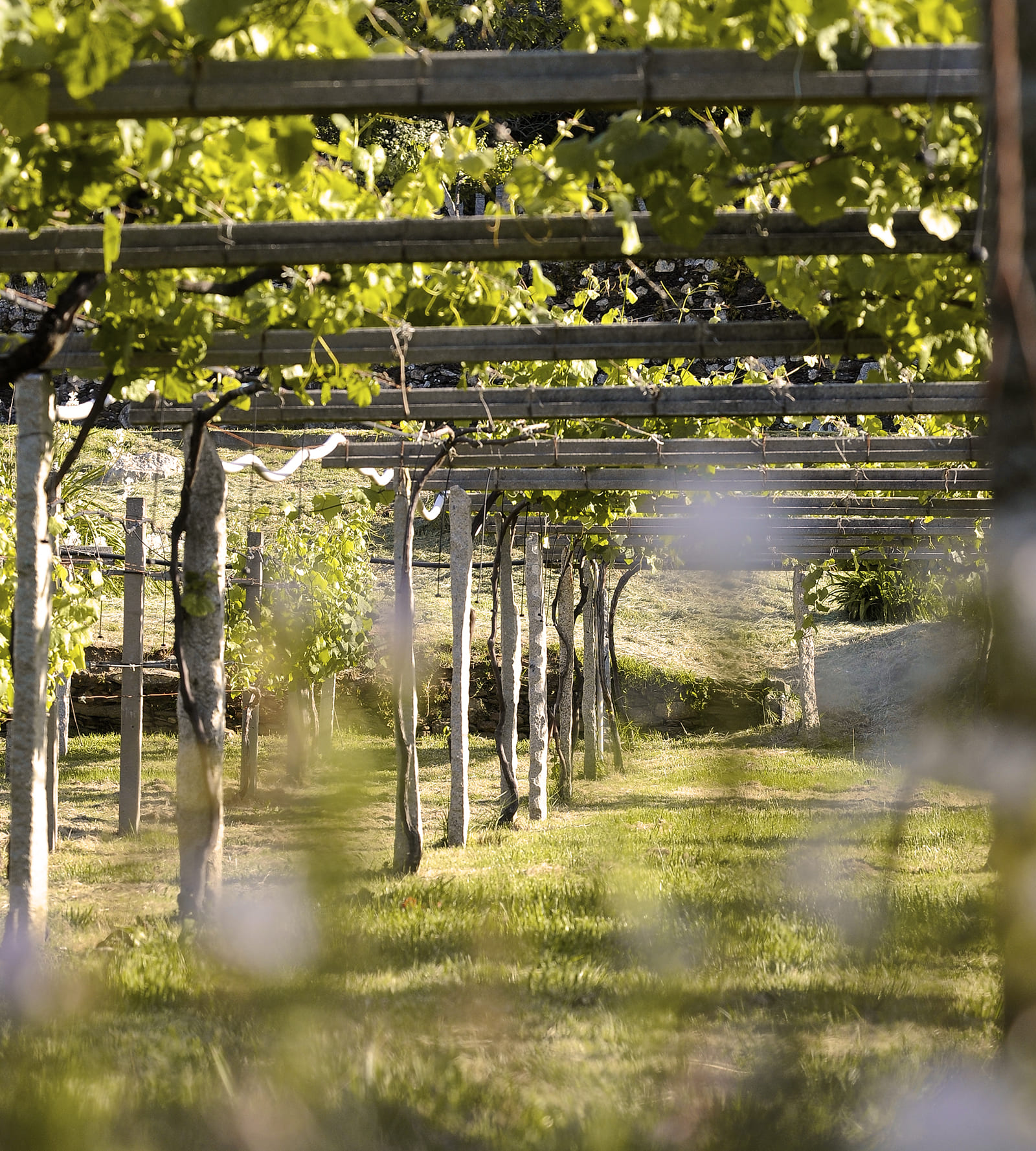
Its southern orientation, together with the influence of the sea and the river, allows for a slow and balanced ripening of native varieties. The traditional use of trellising systems and sunlit slopes enhances the purest expression of the fruit. The result is fresh wines, with balanced acidity and a distinctive floral, saline, and mineral expression.
Wine is made in the vineyard.
Our vineyard, located in the heart of O Rosal, stretches across 44 hectares of gentle slopes near the river. There, we cultivate five native varieties—Albariño, Loureiro, Caíño Blanco, Treixadura, and Godello—with the same care that has guided Santiago Ruiz from the beginning: respect for the land and attention to detail.
We believe that great wine begins in the vineyard. That is why we embrace integrated viticulture practices that help preserve the natural balance of our surroundings. We prioritise reducing chemical treatments, favouring environmentally responsible methods such as the use of pheromones and sexual confusion for pest control. We carry out canopy management (leaf removal and shoot thinning) to improve grape aeration, and we manually remove weeds to protect soil life.
All of this to keep the vineyard ecosystem alive and to craft authentic wines, born from the land and guided by emotion.
EARLY HARVEST
The mild climate of O Rosal favors the early ripening of the grapes.
INTEGRATED VITICULTURE
Techniques are applied to preserve the ecosystem and maintain the purity of the grapes.
HAND HARVEST
Grapes are selected in the vineyard and harvested by hand into small crates.
DOUBLE SELECTION
Once in the winery, the grapes undergo a second manual selection on sorting tables.